



New OPERA - Operating Project for a European Rail Freight Network
Background
New OPERA stands for New European Wish: Operating Project for a European Rail Network and is a Coordinated Action in the area of joint European railway research. The project officially started on 1 January 2005 with a total project duration of 3.5 years. New OPERA will study the necessary step changes for achieving a long-term scenario 2020 of a core network predominantly dedicated to rail freight. New OPERA (Part C) will be coordinated and cooperating with the Coordinated Actions TREND and REORIENT (Parts A, B) of the same call for proposals.
Objectives
The centrality of rail in a pan-European dimension is the ultimate goal of the European Transport Policy encouraging long-term sustainable mobility and promoting a competitive environment. In order to achieve this goal, a modal shift towards rail is necessary, while reverting the erosion of the rail freight market share.
The NEW Opera project will contribute to this goal by assessing ways for:
- Implementing the ERRAC Strategic Rail Research Agenda 2020 by capturing the threefold increase in freight volumes by 2020.
- Providing grounds for the establishment of 15.000 km of new and existing lines predominantly dedicated to freight.
- Revitalising the rail business by applying NEW business models and a NEW service culture through the use of freight dedicated infrastructure.
- Envisaging transitions from the existing rail business model based on rail infrastructure dual use, to one more capable of capturing market demands and achieving productivity and efficiency gains based on dedicated freight networks.
Scenarios
The NEW Opera objectives will be assessed through a Scenario Exercise:
Scenario 0 represents the reference situation at start, where only market forces are at play on existing networks. Scenario 1 already introduces better infrastructure and operations management options, by using intelligent applications and and introducing freight priority on certain lines as well as bottleneck-related investments. Scenario 2 introduces new technologies (longer trains, heavier axle-loads, implementation of ERTMS). And finally Scenario 3 assesses the option for a fully dedicated freight network, introducing double stack where possible, heavier loads, long trains, radio-commanded locomotives, necessary hubs and intelligent applications for the management of all the information.
The methodology applied will embrace the development of four gradual steps:
- Technical solutions,
- Demand, economic and environmental assessment,
- Commercial and marketing requirements for new rail service products,
- Phased migrations, evolutions, interoperability aspects, possible re-use of dismissed and unused rail tracks.
Difficulties, scepticism and opposition from long established interests will accompany such a step change. However, these resistances will be offset by large environmental benefits and greater safety and security achievements deriving from a rebalancing of modal share.
Budget & Partners
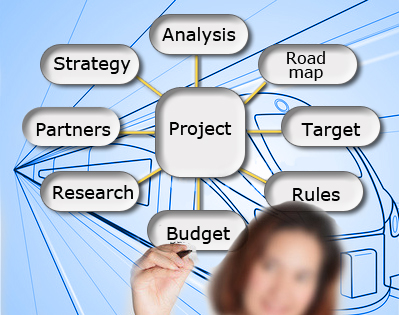
The Coordinated Action New OPERA has a total budget of ca. €3,6 million, which are 100% financed by the European Commission's 6th Framework Programme for Research and Technological Development.
The contracting partners of New OPERA include a number of key players in the rail and transport freight value chain (shippers, intermodal operators, logistics operators, new rail traction companies, infrastructure companies, major ports, wagon owners, trucking companies and manufacturers of rail systems and equipment), which are deeply providing their expertise to fulfil the New OPERA objectives.
A Stakeholders Club will assure an observing role in the validation and dissemination phases of the project and in the key parts of the work program. The Stakeholders Club will consist of commercial partners (infrastructure managers, shippers and operators) plus represenatives of sponsoring partners, which expressed their interest in the New OPERA results.
A Scientific Committee composed of 7 international representatives from European and North-American Academic Institutions will evaluate and approve the results achieved by the partners and the assumptions made for estimated data, which is either not available or difficult to be measured.
Technical & Scientific Work
The work plan of NEW Opera is organised into 6 main work packages (WP1-6), coordinated by a proper project management work package (WP0). Each work package is organised into different tasks, aiming at fulfilling the different achievements expected by the Coordinated Action:
- WP1: State of Innovative Experience
- WP2: NEW Operating and Technical System / Aspects
- WP3: Network Perspective
- WP4: New Product - Services
- WP5: Network Approach - Socio Economic Evaluation
- WP6: Cooperation, Dissemination and Evaluation
For further information on the New OPERA development and current activities, please visit the regularly updated links on this website or contact Franco Castagnetti <newopera@newopera.org>.
Part of the European Union's 6th Framework Programme
for Research and Technological Development
Site programming and design by
Adam Foster Web Engineering